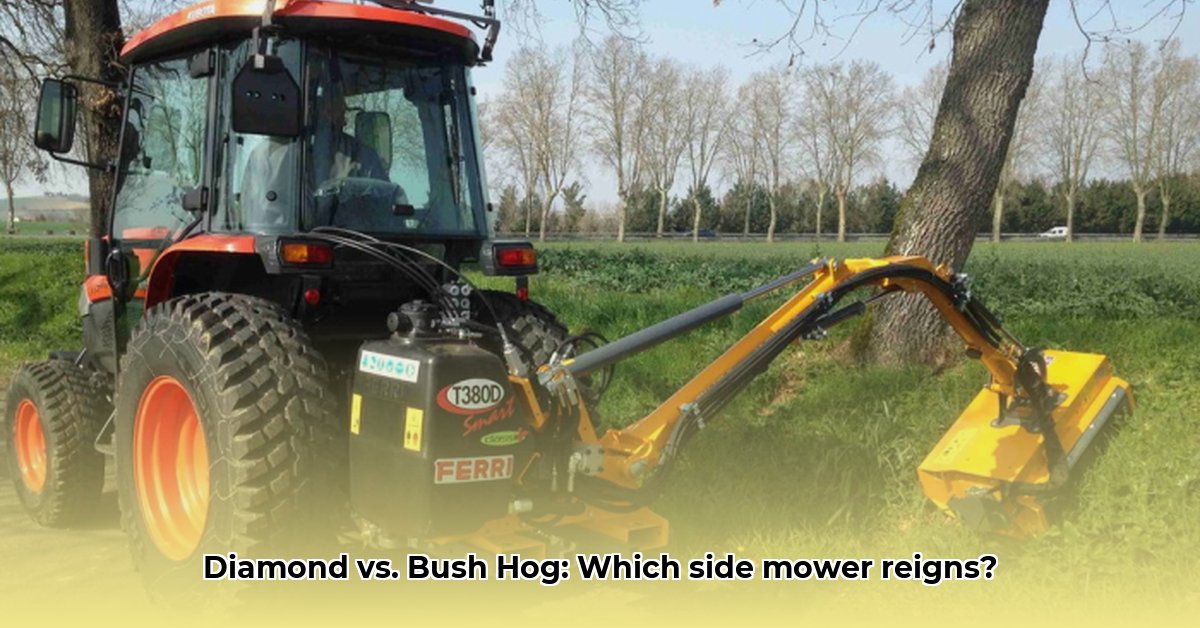
Choosing the right side mower for your tractor is a significant investment. This comparative review focuses on two leading brands: Diamond and Bush Hog, helping you make an informed decision based on your specific needs and budget. We'll examine cutting width, reach, maintenance, cost, and safety features. For help choosing the right size, check out this helpful guide on tractor horsepower and brush hog size.
Cutting Power and Reach: Maximizing Your Mowing Efficiency
Cutting width and reach are crucial factors determining mowing efficiency. Bush Hog offers a wider range of options, particularly with their RMB series, boasting reach capabilities from 11 feet 5 inches to an impressive 18 feet 1 inch. This extensive reach is ideal for large fields. Precise reach specifications for Diamond mowers weren't readily available in our research; therefore additional investigation may be required. Bush Hog also provides a lighter PT5 series suitable for smaller tractors, expanding its user base. Consider your acreage and the required mowing reach when making your decision. What size is your property, and how much reach do you truly need?
Durability and Construction: Built to Withstand the Test of Time
Both Diamond and Bush Hog mowers are built for durability, but their construction details differ. Diamond emphasizes its use of 1-inch thick steel discs, suggesting robust construction. While Bush Hog doesn't specify materials with the same level of detail, their long-standing reputation in demanding agricultural settings hints at comparable durability. The ruggedness required will depend on your specific terrain – rocky fields demand more robust construction than flat, smooth land. Reviewing warranty information for both brands provides further insight into manufacturers’ confidence in their products’ longevity. How tough does your mower need to be to handle your specific conditions?
Maintenance and Servicing: Minimizing Downtime and Maximizing Uptime
Diamond mowers prioritize ease of servicing. Their simple two-blade system with replaceable inserts simplifies maintenance and minimizes downtime. Conversely, Bush Hog's versatility, due to the variety of cutting heads offered (flail, cutter bar, rotary), potentially adds complexity to maintenance procedures depending on the chosen attachment. Consider not only initial purchase price but also the expected long-term maintenance costs and potential repair expenses. How much time and money are you willing to invest in upkeep?
Safety Features: Protecting the Operator
Operator safety is paramount. Bush Hog's RMB models emphasize the necessity of tractor cabs and protective screens. This strong stance on safety is a significant advantage. Diamond's marketing didn't highlight these features with the same emphasis. Further investigation into Diamond's safety provisions is recommended. Regardless of brand selection, prioritizing your safety is crucial. Does the mower require additional safety equipment that you must purchase separately?
Comparing the Contenders: Side-by-Side Specifications
| Feature | Diamond | Bush Hog |
|---|---|---|
| Cutting Head | Rotary (Information limited) | Rotary, Flail, Cutter Bar |
| Reach | Information not readily available | 11'5" - 18'1" (RMB models), Varies (PT5) |
| Cutting Capacity | Information not readily available | 1-2" to 4" (depending on model and head) |
| Maintenance | Easy access, replaceable inserts | Varies depending on chosen attachment head |
| Construction | 1" thick steel discs | Robust construction, specifics unavailable |
| Safety Features | Information not readily available | Requires tractor cab and protective screens (RMB models) |
| Tractor HP | Information not readily available | Varies (PT5 model designed for lower HP) |
Making Your Choice: A Balanced Decision
Selecting the best side mower involves careful evaluation of individual needs and intended applications. This comparison provides a foundation for your decision-making process. Consider both initial purchase price and the long-term costs of maintaining and potentially repairing each machine. Contacting both Diamond and Bush Hog dealers is advised to discuss your specific needs and obtain personalized recommendations. Thoroughly research reviews from other farmers using similar equipment. The right choice translates to enhanced efficiency and peace of mind.
How to Choose: A Step-by-Step Guide
- Assess your needs: Define terrain type and vegetation characteristics.
- Research Diamond mowers: Obtain complete specifications and user reviews for comparable models.
- Compare features: Use the table above as a guide, paying close attention to cutting width, reach, horsepower requirements, and maintenance needs.
- Consider cost: Factor in initial purchase price, maintenance costs, and potential repairs.
- Consult with dealers: Discuss your specific situation with dealers from both brands to benefit from their expertise.
- Make your selection: Choose the mower best suited to your budget and specific requirements.
Remember: Thorough research and consultation are critical for a well-informed decision.